Quantum Pings Library
The Rupture of Time: Synchronicity and Jung's Critique of Modern Western Culture
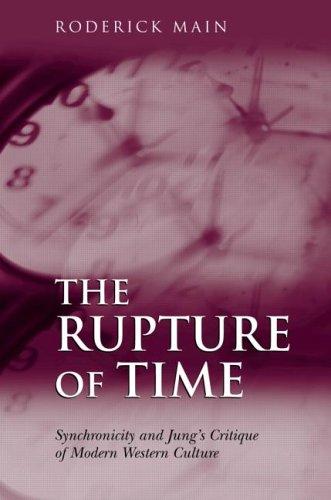
- Type
- Book
- By
- Roderick Main
- Publisher
- Brunner-Routledge
- Source
- Brunner-Routledge
- Published
- 2004
Main's study of synchronicity as a critique of modern Western assumptions about time, causality, and meaning — the academic heart of the topic.
Roderick Main's The Rupture of Time (2004) reads synchronicity as something larger than a curiosity: a critique of modern Western assumptions about time, causality, and what counts as knowledge. For Main, Jung's essay is an invitation to rethink the very categories the modern world runs on.
Main later went on to lead the Synchronicity Research Group at the University of Essex, and this book is the intellectual foundation of that project. It is scholarship rather than experiment — it elevates the idea without attempting to prove it — but it is the reason the concept now has a seat in the academy.
The meaning
Main treats synchronicity with full intellectual seriousness, connecting it to debates in philosophy and the history of ideas.
The skeptic
A work of cultural critique and history; it engages the idea without attempting to prove it.
About the author
Professor at the University of Essex and the leading academic scholar of Jung's synchronicity.
Key takeaways
- Reads synchronicity as Jung's challenge to modern ideas of time and causality.
- The academic reference point for serious study of the concept.
- Roderick Main also leads the Synchronicity Research Group at Essex.