Topics › Meaning vs randomness
Quantum Pings Topics
Meaning vs randomness

Two honest ways to read the same event.
This essay explores how people interpret coincidences through two lenses: the meaning-seeker's perspective and the skeptic's view.
Coincidences can spark a sense of wonder, and many people are drawn to the idea that some events in life hold deeper significance. When two unrelated things align perfectly, it can feel almost magical. However, others argue that these moments are merely the result of chance. This essay explores how people interpret coincidences through two lenses: the meaning-seeker's perspective and the skeptic's view.
The Allure of Meaningful Coincidence
Meaning-seekers often find comfort in the idea that coincidences can reveal truths about life, destiny, or even a higher power. These moments can feel profound. For instance, if you randomly think of an old friend and then run into them the next day, it might feel like more than just luck. Some view these instances as signs or messages, suggesting that the universe is trying to communicate something important.
This belief is supported by the notion of apophenia, which is the tendency to see patterns in random data. While skeptics argue that this is simply the brain’s way of seeking meaning without any external signal, meaning-seekers appreciate the creative insights that can come from connecting seemingly unrelated dots (Apophenia by Klaus Conrad).
Even skeptics acknowledge that the human brain is remarkable for its ability to create meaning. The compelling question remains: are some patterns simply noise, or do they hold deeper significance? This ongoing debate fuels the allure of meaningful coincidences.
The Skeptic's Perspective
On the other side of the debate, skeptics argue that coincidences are statistical events that often feel significant simply because of how human cognition works. The concept of confirmation bias plays a critical role in this perspective. People tend to notice and remember instances that confirm their beliefs while ignoring countless other events that do not fit their narrative (Confirmation Bias by Psychology). If you’re looking for signs in the universe, you’re more likely to notice the hits and forget the misses.
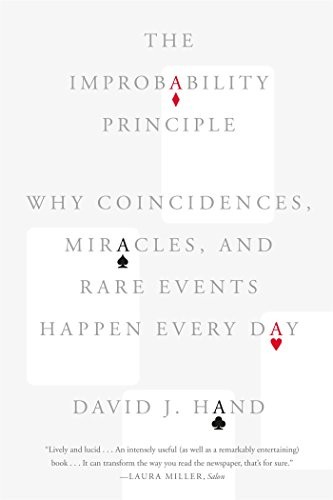
David J. Hand's research in "The Improbability Principle" provides a statistical framework for understanding coincidences. He argues that extremely improbable events occur more frequently than one might think, especially when considering the vast number of opportunities for such events to happen. In essence, Hand suggests that coincidences need not be extraordinary or meaningful; they simply happen due to the laws of probability (The Improbability Principle by David J. Hand).
The Middle Ground: Experiences and Interpretations
Despite the skeptic's arguments, it's important to recognize that the experience of a coincidence can feel real and impactful, regardless of its objective randomness. Meaning-seekers claim that acknowledging these experiences does not diminish their significance. They argue that the human experience is rich with connections that can lead to creativity, insight, and personal growth, even if these connections arise from a subjective interpretation of events (The Truth About Coincidences by Numen).
Research by Alejandro Toledo Martínez discusses the relationship between apophenia and creativity, highlighting how our judgments shape our understanding of coincidences. This perspective suggests that while our brains might see connections where none exist, the very act of perceiving these connections can influence our creative processes, adding a layer of depth to our experiences (The Shared Generative Zone Apophenia and Creativity by Alejandro Toledo Martínez).
Challenges in Interpretation
The challenge lies in discerning meaningful coincidences from mere chance. The line between the two can feel blurry. Meaning-seekers might interpret a significant life event as more than random chance, while skeptics would argue that the same event can be explained through psychological and statistical principles.
For example, a person might feel that their life has taken a particular turn due to a series of coincidental events. A skeptic would remind them that without specific empirical evidence supporting the significance of those events, it’s easy to attribute meaning where there might be none (Access or Apophenia by Alejandro Toledo Martínez).
Morgan Wolfgang Lake's framework of pragmadromia further complicates this discussion by emphasizing quantifiable events over subjective interpretation. While this approach seeks to ground experiences of synchronicity in observable data, skeptics may still question its applicability to the subjective nature of human perception (Pragmadromia: Objective Synchronicity by Morgan Wolfgang Lake).
Conclusion: A Balance of Perspectives
In the end, the discussion around coincidences is complex, with valid points from both meaning-seekers and skeptics. Each perspective sheds light on the human experience in different ways. Meaning-seekers find value in the connections they perceive, while skeptics remind us of the cognitive biases and statistical realities that can shape our interpretations.
Neither viewpoint offers a definitive answer to whether coincidences are inherently meaningful. Instead, they reflect the complexity of human cognition and our search for understanding in a chaotic world. Whether these events are seen as signs from the universe or mere chance, they continue to spark curiosity, creativity, and conversation about the nature of our experiences.
Sources and further reading
 Confirmation biasConcept
 The Improbability PrincipleBook
 The Truth About CoincidencesVideo
 The Shared Generative Zone Apophenia and creativity split at the judge, not the generator -a dual-process account, measured in language models and framed for humansStudy
 Access or ApopheniaStudy
 Pragmadromia: Objective SynchronicityStudy
 Functional Consciousness - Pillar 16: Quantum Nihilism and the Simulation MythStudy
 ApopheniaConcept