Quantum Pings Library
Fluke: The Math and Myth of Coincidence
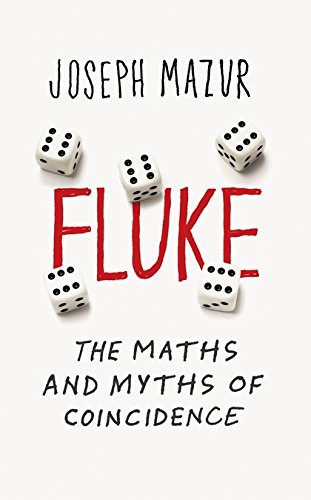
- Type
- Book
- By
- Joseph Mazur
- Publisher
- Basic Books
- Source
- Basic Books
- Published
- 2016
A readable account of the mathematics behind coincidence, from probability to psychology, and why our intuition about "what are the odds" is usually wrong.
Joseph Mazur's Fluke (2016) is the readable companion to Hand's more technical Improbability Principle. A mathematician with a gift for plain language, Mazur walks through the arithmetic of the famous coincidences and shows, step by step, where human intuition about "the odds" goes wrong.
The book's core message is humbling: people are systematically terrible at probability, and most coincidences are far more likely than they feel. Mazur respects the shiver of the uncanny even as he dissolves it, which makes Fluke useful to both sides of the argument — a skeptic's toolkit written without a sneer.
The meaning
Mazur respects the feeling of the uncanny even as he explains it, which makes the book fair to both sides.
The skeptic
The math is the message: most coincidences are far more probable than they feel, because humans are bad at estimating probability.
About the author
American mathematician and professor emeritus at Marlboro College, known for making mathematics readable.
Key takeaways
- Human intuition about probability is systematically wrong.
- Most coincidences are more likely than they feel.
- Mazur walks through the classic examples with real arithmetic.