Quantum Pings Library
Persi Diaconis
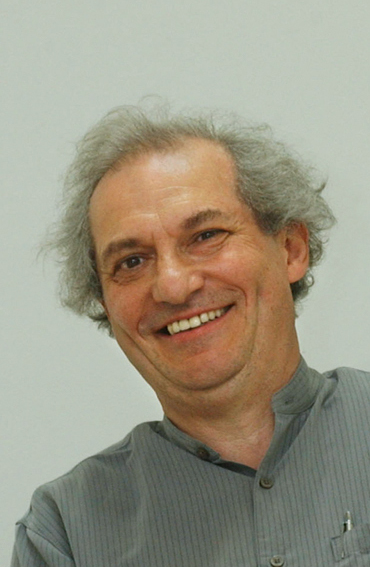
- Type
- Person
- By
- Mathematician and statistician
- Affiliation
- Stanford University
- Source
- Wikipedia ↗
A magician-turned-statistician whose work, with Frederick Mosteller, gave the study of coincidence its mathematical rigor.
Persi Diaconis took an unusual route into mathematics: he was a professional magician before becoming a Stanford statistician. That background made him uniquely suited to the study of coincidence, because stage magic is, in large part, the deliberate manufacture of events that feel impossible.
With Frederick Mosteller, Diaconis wrote the 1989 paper that gave coincidence its mathematical home, formalizing the law of truly large numbers. He knows better than almost anyone how extraordinary chance can be, and he still treats the remaining anomalies with respect rather than contempt — which is why both sides of the argument quote him.
The meaning
Diaconis knows better than anyone how extraordinary chance can be — and he still treats the remaining anomalies with respect.
The skeptic
His work is the mathematical core of the skeptical position: most coincidences are explained by scale and selection.
About this person
A former professional magician turned Stanford statistician who has spent his career studying randomness and coincidence.
Key takeaways
- Co-author of "Methods for Studying Coincidences" (1989).
- A former magician, uniquely placed to explain how chance fools us.
- The mathematician's mathematician on randomness and coincidence.