Quantum Pings Library
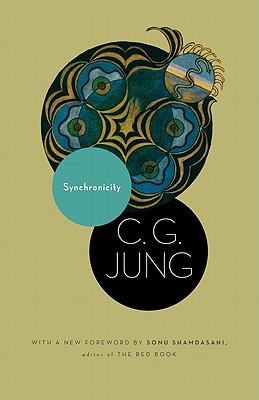
Synchronicity: An Acausal Connecting Principle
- Type
- Book
- By
- C. G. Jung
- Publisher
- Routledge / Bollingen
- Source
- IAAP ↗
- Published
- 1952
Jung's 1952 essay, the text that named the idea. He argues that meaning can connect an inner event and an outer one even when no cause links them.
This is the text that named the idea. Published in 1952 alongside a companion essay by the physicist Wolfgang Pauli, Jung's "Synchronicity: An Acausal Connecting Principle" argues that meaning can connect an inner event and an outer one even when no cause runs between them. He draws his examples from the I Ching, from astrology, and from the patient whose dream of a golden scarab coincided with a real beetle tapping at the consulting-room window.
The essay matters less for its proof — Jung himself called it a hypothesis — than for what it opened up. It gave a respectable name to an experience people had been describing for centuries, and it fixed the terms of the argument that still runs today: whether meaningful coincidence is a clue about the structure of reality, or a clue about the structure of the mind.
In all chaos there is a cosmos, in all disorder a secret order.
The meaning
Jung worked with the physicist Wolfgang Pauli on the idea that mind and matter might share a deeper order. It is the foundation almost everything else on this shelf builds from.
The skeptic
Jung himself called it a hypothesis, not a proof. Critics note that meaningful coincidence is subjective, and that the same events are fully explained by chance plus a pattern hungry brain.
About the author
Carl Gustav Jung (1875–1961), Swiss psychiatrist and founder of analytical psychology.
Key takeaways
- The 1952 essay that named synchronicity and defined it as an acausal connecting principle.
- Jung built the idea around the I Ching, astrology, and his famous scarab-beetle case.
- He saw synchronicity as psyche and matter touching at a level deeper than cause and effect.