Topics › Pareidolia, explained
Quantum Pings Topics
Pareidolia, explained
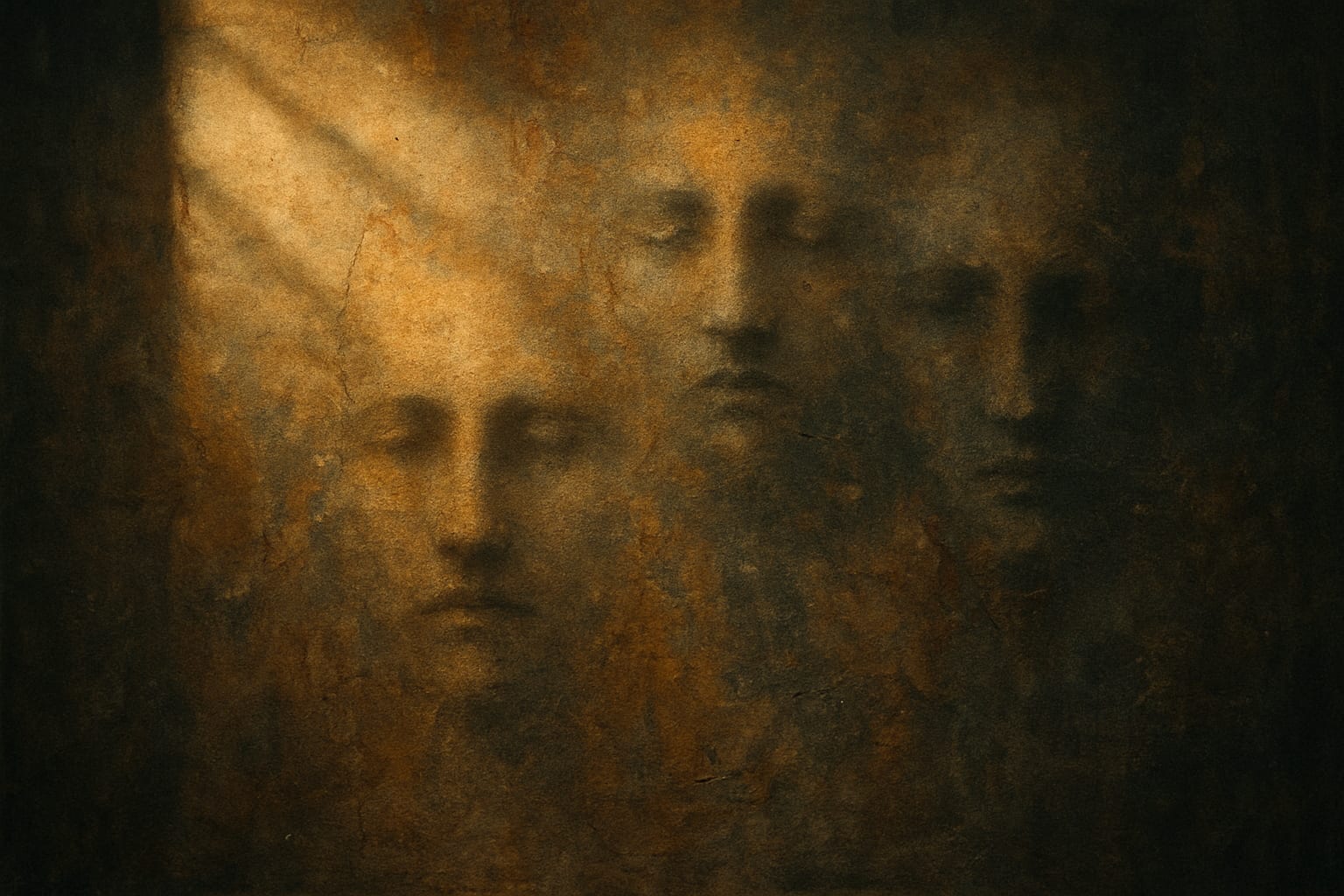
Faces in things, and what that says about us.
Pareidolia, Explained Pareidolia is a fascinating phenomenon where people see meaningful patterns, often faces, in random stimuli.
Pareidolia is a fascinating phenomenon where people see meaningful patterns, often faces, in random stimuli. Whether it’s a cloud that looks like a dragon or a piece of toast with the likeness of a celebrity, pareidolia reveals much about how our brains work. This essay explores both the meaning-seeker's perspective, which sees significance in these experiences, and the skeptic's view, which questions the validity of finding meaning in randomness.
Understanding Pareidolia
At its core, pareidolia is our brain's way of making sense of the world. It's a cognitive bias that helps us recognize patterns, especially faces, in a chaotic environment. Our brains are wired to identify faces quickly. This ability has evolutionary advantages, as recognizing friends or foes can be crucial for survival.
In industrial settings, for instance, people often report seeing faces in machinery or other inanimate objects. This concept, known as industrial pareidolia, suggests that our search for meaning is not limited to natural environments. According to the work of Surjan, these occurrences might reflect our natural inclination to seek significance in randomness (Industrial Pareidolia by Surjan). Here, a meaning-seeker could argue that such experiences illustrate a profound connection between our brains and the world around us.
On the other hand, skeptics might argue that pareidolia is simply a byproduct of cognitive biases. Seeing patterns in random noise doesn't imply that there's any inherent meaning behind those patterns. Instead, it's a quirk of the human mind, pointing to our tendency to over-interpret stimuli. The skeptics see pareidolia as an example of this cognitive bias, illustrating that not every perceived connection holds significance.
The Role of Apophenia
Apophenia is closely related to pareidolia. It refers to the human tendency to perceive meaningful connections within random data. This idea has been explored in various contexts, including creativity and decision-making. Research suggests that how we judge coincidences might influence our creative processes. When we see a pattern, we might be more inclined to generate ideas based on that perception (The Shared Generative Zone by Toledo Martínez).
From the meaning-seeker's viewpoint, this could imply that our creativity is shaped by our perceptions of coincidences. If we see a face in a cloud, we might create a story around it, linking it to our experiences or emotions. Such connections can provide a sense of fulfillment or insight.
Conversely, skeptics point out that this relationship lacks solid empirical backing. Without data or clear methodology, claims surrounding creativity and apophenia can seem unfounded. It raises the question of whether these connections are genuinely meaningful or merely illusions crafted by our minds.
Belief and Perception
Interestingly, research has shown that individuals who hold paranormal beliefs are more likely to experience pareidolia than those who identify as skeptics. A study indicated that believers see faces in random noise more frequently than non-believers (Paranormal and religious believers are more prone to illusory face perception than skeptics by Riekki et al.). Here, meaning-seekers might interpret this as evidence of deeper sensitivity to meaningful connections in the world. They might argue that believers genuinely perceive patterns that skeptics overlook.
However, skeptics might argue that this observation supports a broader point. The tendency to see faces or patterns can predict belief in paranormal phenomena, suggesting a direct link between cognitive biases and belief systems. Essentially, skeptics view this as further evidence that our brains are wired to find meaning, even when none exists.
Insights from Cognitive Studies
Several studies have examined the cognitive mechanisms behind pareidolia and apophenia. For example, research has connected the ability to perceive meaning in randomness to certain psychological traits, such as schizotypy (Apophenia, theory of mind and schizotypy by Fyfe et al.). This suggests that while the capacity to detect patterns is a fundamental human ability, it can manifest differently based on individual traits.
From a meaning-seeker's perspective, this indicates that our brains have sophisticated machinery that helps us derive meaning from our experiences. The ability to read emotions or intentions into randomness may not be a flaw but rather a testament to our complex cognitive architecture.
On the skeptical side, some argue that this connection places synchronicity in the same category as clinical pattern-seeking behavior. In this view, pareidolia might just be a normal cognitive function that can occasionally lead us to false conclusions about meaning and intention.
Conclusion
Pareidolia reveals the complex ways our minds interact with the world. While meaning-seekers may see deeper significance in these experiences, skeptics urge caution, emphasizing the cognitive biases at play. The debate surrounding pareidolia highlights broader questions about how we perceive and interpret our surroundings. Whether viewed as a window into our minds or simply a quirk of perception, understanding pareidolia enriches our appreciation of human cognition and creativity.
Sources and further reading
 Backward Cognition: A Working Synthesis of Reverse-Pattern Intuition and Interlocking Constructs in Cognitive ScienceStudy
 The Shared Generative Zone Apophenia and creativity split at the judge, not the generator -a dual-process account, measured in language models and framed for humansStudy
 Paranormal and religious believers are more prone to illusory face perception than skeptics and non-believersStudy
 Apophenia, theory of mind and schizotypy: Perceiving meaning and intentionality in randomnessStudy
 Industrial PareidoliaStudy
 Apophenia or epiphanyi the gordian knot of LT4/LT3 replacement therapy in current hypothyroidism guidelinesStudy
 The Psychiatric Y2K Bug: Delayed Apophenia and the Epidemic of Ideological Contagion in the Algorithmic EraStudy
 What Do Current Measures Tell Us About Apophenia? A Preregistered Systematic Review of the Measurement Properties of Apophenia InstrumentsStudy