Topics › The algorithm and the omen
Quantum Pings Topics
The algorithm and the omen
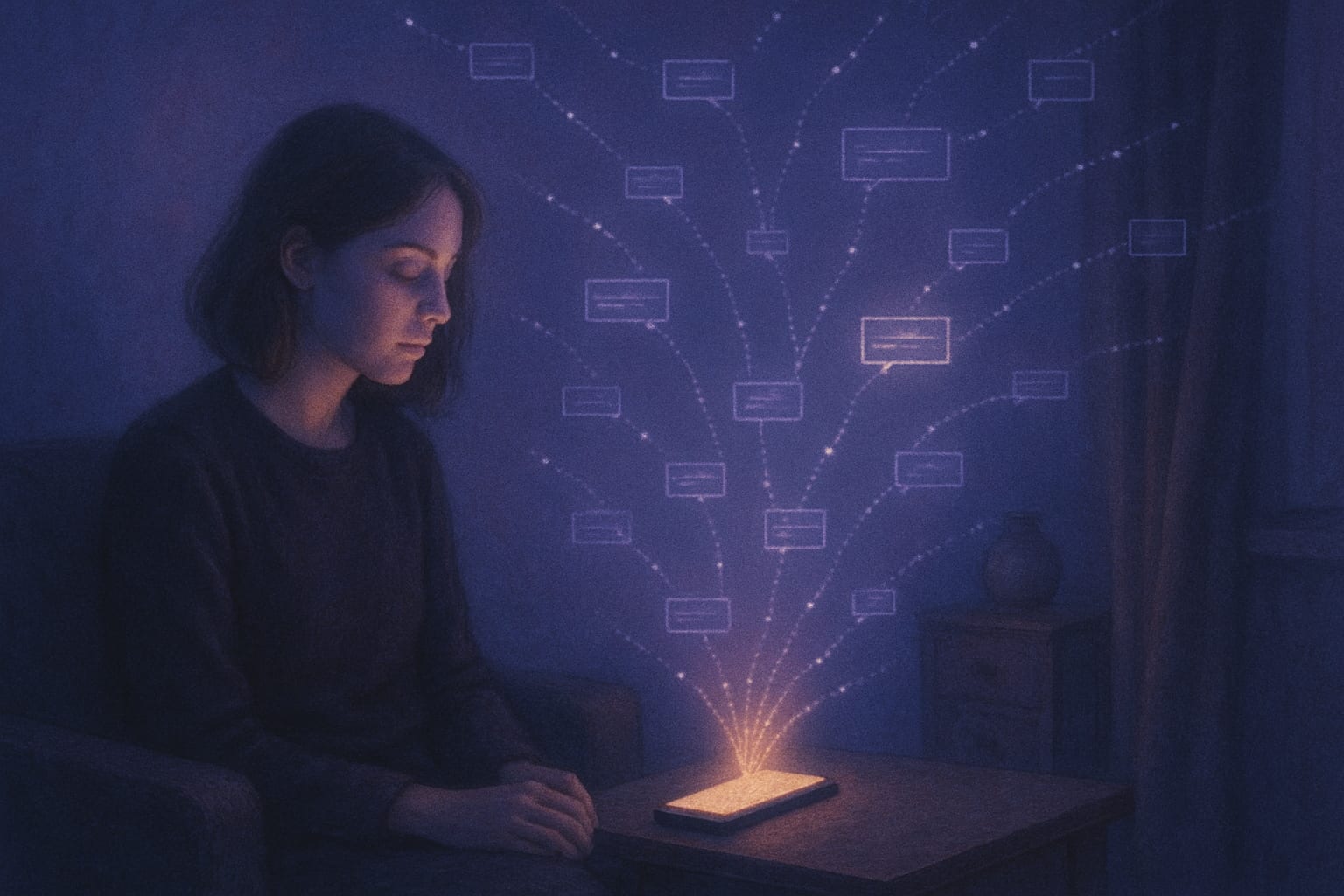
How recommendation feeds turn coincidence into a feeling of meaning.
The feeling of meaningful coincidence is often likened to the concept of synchronicity, introduced by psychologist Carl Jung.
The Algorithm and the Omen
In today’s digital landscape, many people find themselves grappling with experiences that feel eerily significant. They might view a specific ad, discover a song, or scroll past a post that resonates deeply with their current situation. This sensation often leads to a search for meaning, and it raises a question: Are these moments genuine coincidences, or are they manufactured by the algorithms that shape our online experiences?
The feeling of meaningful coincidence is often likened to the concept of synchronicity, introduced by psychologist Carl Jung. Jung saw synchronicity as a psychological phenomenon where events are meaningfully related despite lacking a direct causal connection. Today, however, the rise of recommendation algorithms transforms how we interpret these experiences.
Meaning-Seekers and the Algorithmic Uncanny
For many meaning-seekers, the uncanny feeling that arises from recommendation feeds is a valid modern experience. As noted in the video essay "Are Algorithms Faking Coincidences? Carl Jung's Synchronicity" by YouTube, these feeds often seem to resonate so closely with individuals that they feel like signs or omens (YouTube). The uncanny nature of this experience invites people to recognize patterns and look for deeper meanings, even if those meanings stem from algorithms designed to cater to their preferences.
Many people find reassurance in the idea that something significant underlies their experiences. In this light, the algorithms can appear to validate their thoughts and emotions. This notion is echoed in "Is It a Coincidence, or is the Algorithm Watching?" where the creators argue that the experience of seeing signs in one's feed deserves discussion rather than dismissal (YouTube).
The Skeptic's Perspective
From a skeptic's standpoint, the algorithms are simply sophisticated tools that analyze past behavior to deliver tailored content. They’re not mystical forces; they’re based on data about clicks and interactions. The uncanny feeling, skeptics argue, is a product of our own cognitive biases and the patterns that algorithms exploit. As highlighted in "The Truth About Coincidences," the perception of meaning often arises from our psychology rather than any actual significance in the events themselves (YouTube).
Skeptics also point out that signs found in digital feeds can be seen as weak. The content we encounter is systematically built to resonate with our interests and previous actions, making it less about genuine connections and more about a calculated response. The algorithms are designed to keep us engaged, creating the illusion of significance where none exists.
Coincidence and Human Experience
The tension between these two perspectives becomes clear when we consider the nature of coincidences themselves. The mathematical and psychological aspects of coincidence reveal much about how humans perceive events. In "The Truth About Coincidences," researchers address how our brains are wired to find patterns and meaning, even in random occurrences (YouTube). This tendency is known as apophenia, where we see connections that may not actually be there.
Interestingly, studies such as "The Apophenia Gradient" delve into how AI and language models struggle to differentiate between genuine connections and mere coincidences. While these models can identify patterns, they often fail to grasp the nuance that humans inherently understand. This suggests that while algorithms can identify trends, the human ability to find meaning remains unique (Toledo Martínez).
The Crowd-Sourced Experience
Platforms like Reddit provide a space for individuals to share their experiences of synchronicity and coincidence. Threads about “creepiest coincidences” and dedicated communities like r/Synchronicity illustrate that many people feel something extraordinary is happening in their lives. These platforms gather countless personal stories, which for meaning-seekers can serve as compelling evidence of something larger at play (Reddit).
However, skeptics argue that these collections of stories are more reflective of the law of truly large numbers. With thousands of users each contributing their experiences, the sheer volume will naturally yield astonishing anecdotes. Ordinary coincidences go unreported, while extraordinary stories capture attention, leading to a skewed perception of reality (Reddit).
The Role of Interpretation
The conversation about algorithms and coincidences often leads back to interpretation. For meaning-seekers, moments like glancing at a clock at 11:11 repeatedly can feel like signs from the universe, as discussed in various Reddit threads (Reddit). Yet, skeptics explain that this phenomenon is largely due to the frequency illusion and confirmation bias, where individuals only remember the instances that stand out.
Similarly, projects like the SyncTXT app demonstrate how random messages can evoke strong emotional responses, but they also underscore the danger of interpreting these messages as predictions rather than just coincidences (Reddit). Users often describe moments that feel tailored to them, yet these moments are still rooted in randomness.
Conclusion
The interplay between algorithms and the search for meaning in our lives is complex. While recommendation systems can create an uncanny sense of relevance, the skepticism about their true significance is equally valid. Understanding this dynamic can help individuals navigate their experiences without falling into the trap of mistaking coincidence for meaning.
Ultimately, whether viewed through a lens of seeking meaning or skepticism, the way we interpret our experiences remains deeply personal. The algorithms may guide us, but each individual's journey through these moments is uniquely their own.
Sources and further reading
 Are Algorithms Faking Coincidences? Carl Jung's SynchronicityVideo
 Is It a Coincidence, or is the Algorithm Watching?Video
 The Truth About CoincidencesVideo
 The Apophenia Gradient Do language models tell genuine semantic connection from coincidence -and does it improve with capability? A signal-detection studyStudy
 "What's your creepiest coincidence?"Social post
 r/Synchronicity — the coincidence communitySocial post
 The SyncTXT generator threadSocial post
 11:11 and repeating numbersSocial post