Topics › The mathematics of coincidence
Quantum Pings Topics
The mathematics of coincidence
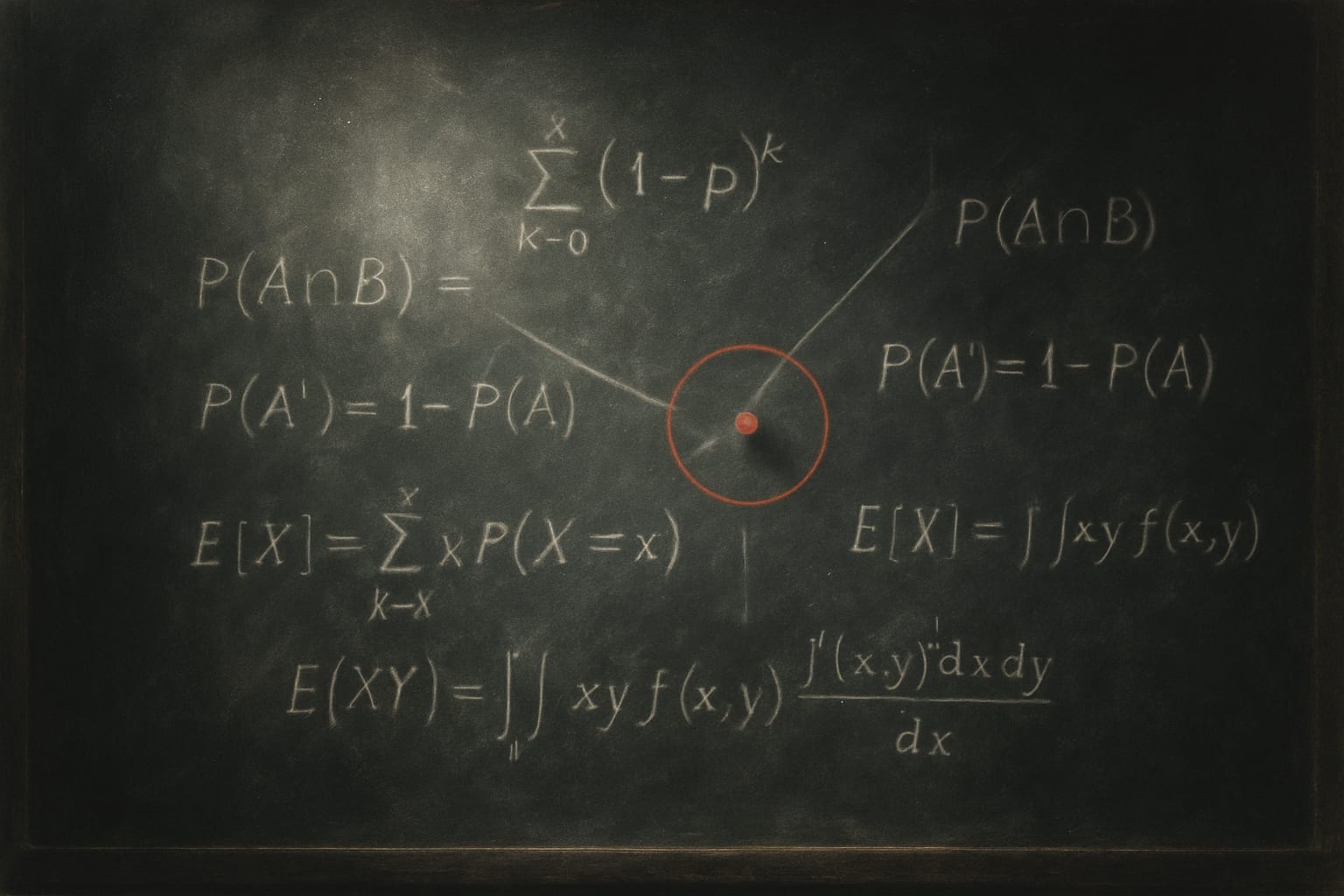
How to estimate how unlikely a coincidence really is.
Understanding Coincidence Through Mathematics Coincidences happen all the time.
Understanding Coincidence Through Mathematics
Coincidences happen all the time. Sometimes they seem so extraordinary that they feel like they must mean something. But how can we tell if a coincidence is truly special or just a result of random chance? Mathematicians and psychologists have explored this question, shedding light on the nature of coincidence from different angles.
The Law of Truly Large Numbers
The "law of truly large numbers" is a concept coined by mathematicians Persi Diaconis and Frederick Mosteller. It suggests that with enough opportunities for an event to occur, even the most improbable coincidences can happen. For instance, a one-in-a-million event is expected to happen to about eight people daily in the United States. This principle helps explain why we often perceive coincidences as significant. When considering a large enough scale, it's clear that rare events aren't as rare as they seem when viewed individually (Diaconis and Mosteller).
From a meaning-seeker's perspective, while this law clarifies how ordinary coincidences can happen, it doesn't always satisfy those looking for deeper significance. Some argue that certain coincidences arrive at just the right moment, making them feel particularly meaningful. Skeptics, on the other hand, emphasize that most perceived coincidences can be explained through the sheer scale of possibilities. They see the law as a mathematical tool debunking the notion that some coincidences are miraculous or unique.
Apophenia and Pattern Recognition
Apophenia refers to the human tendency to perceive meaningful patterns in random data. This cognitive phenomenon is crucial for understanding why some people see significance in coincidences while others do not. Research has shown that individuals who are more inclined to believe in the paranormal are also more likely to detect patterns, such as faces in random noise or intentions in random movements (Riekki et al., 2013; van Elk, 2013).
Meaning-seekers might view these findings as evidence that there’s a unique capacity for seeing deeper meanings that skeptics may lack. They might argue that this capacity allows believers to experience life in a more connected way. However, skeptics interpret these findings differently. They argue that the inclination to see patterns where none exist can lead to misguided beliefs. In other words, this tendency to see agency or intention in randomness could easily convert a simple coincidence into a personal message.
Cognitive Habits and Coincidence
The cognitive habits associated with apophenia shape how we interpret the world. Studies show that people with certain traits, like those connected to schizotypy, are more likely to see intention in randomness. This doesn't mean there's anything inherently wrong with these cognitive traits, but it does suggest a spectrum where normal pattern-seeking might blur into something more pathological (Fyfe et al., 2008).
From the perspective of those who seek meaning, this understanding reinforces the idea that our brains are equipped to find significance, perhaps even in coincidences that might seem trivial. They might argue that this capacity is part of being human. Skeptics, though, often caution against equating such tendencies with genuine understanding. They may argue that the ability to over-detect agency is a cognitive flaw rather than a strength, positioning synchronicity alongside more extreme instances of pattern-seeking behavior.
Coincidence in Everyday Life
Sometimes we encounter coincidences that feel deeply personal or impactful. The classic example of a "hot hand" in basketball illustrates how fans perceive patterns from random occurrences. Despite the statistical evidence showing that these streaks often align with pure chance, the feelings associated with them are powerful. Fans might interpret a player's success as a sign of a special connection to the game (Gilovich et al., 1985).
Meaning-seekers often point to these examples as proof that our experiences hold more weight than statistical analyses suggest. They argue that these bold feelings can create a sense of purpose or direction in life. Skeptics counter that such beliefs can lead to false conclusions about causality and success, reinforcing the idea that our brains tend to misinterpret random sequences as meaningful patterns.
Coincidence and Language Models
Recent research into artificial intelligence provides another layer to this discussion. Studies exploring how language models interpret meaning reveal that even advanced AI struggles to distinguish between true semantic connections and mere coincidences (Toledo Martínez). Meaning-seekers might see this as a limitation of technology, suggesting that human intuition for meaning retains a unique value. Skeptics could argue, however, that these findings highlight the current limitations of AI and do not necessarily translate to insights about human cognition.
Conclusion
The mathematics of coincidence reveals a complex interplay between randomness and perception. On one hand, the law of truly large numbers suggests that many coincidences are simply the result of chance. On the other hand, the human tendency to find meaning in randomness, whether through cognitive patterns or emotional experiences, complicates our understanding.
Both meaning-seekers and skeptics contribute valuable perspectives to this ongoing conversation. By exploring the nuances of coincidence, we can appreciate how our brains interpret the world, while also acknowledging the role of probability in shaping our experiences. Understanding these dynamics can help us navigate the fascinating yet often puzzling phenomenon of coincidence.
Sources and further reading
 Methods for Studying CoincidencesStudy
 Paranormal and religious believers are more prone to illusory face perception than skeptics and non-believersStudy
 Paranormal believers are more prone to illusory agency detection than skepticsStudy
 Apophenia, theory of mind and schizotypy: Perceiving meaning and intentionality in randomnessStudy
 The hot hand in basketball: On the misperception of random sequencesStudy
 The Apophenia Gradient Do language models tell genuine semantic connection from coincidence -and does it improve with capability? A signal-detection studyStudy
 The Shared Generative Zone Apophenia and creativity split at the judge, not the generator -a dual-process account, measured in language models and framed for humansStudy
 The law of truly large numbersConcept