Topics › The frequency illusion
Quantum Pings Topics
The frequency illusion

Why you see the new thing everywhere, once you know it's there.
Understanding the Frequency Illusion Have you ever noticed a new car model on the road and suddenly it feels like everyone is driving it?
Understanding the Frequency Illusion
Have you ever noticed a new car model on the road and suddenly it feels like everyone is driving it? Or you hear a particular word for the first time, and then you notice it everywhere? This phenomenon is called the frequency illusion, also known as the Baader-Meinhof phenomenon. It’s fascinating how our perception can shift so dramatically based on recent experiences, making it seem like certain things have suddenly multiplied in our environment.
The frequency illusion is tied to our selective attention, which is influenced by psychological factors like confirmation bias and the way we process information. When we first encounter something new, our brains heighten our awareness of it, leading us to notice it more frequently in our surroundings.
The Role of Confirmation Bias
Confirmation bias plays a crucial role in how we experience coincidences and patterns. This psychological concept explains why we tend to remember instances that confirm our beliefs while forgetting those that contradict them. For example, if you recently bought a new car, you’ll likely pay more attention to seeing that car model on the road, while ignoring the countless other vehicles that don’t match your new purchase. This selective memory can create a compelling sense of connection or significance where there is none.
Some meaning-seekers might find comfort in this idea, believing that their experiences are shaped by deeper meanings, even if those meanings are more about perception than reality. Skeptics, on the other hand, argue that confirmation bias thoroughly explains these feelings of significance. They suggest that it’s simply a case of mental filtering rather than any mystical or meaningful connection in the universe.
The Math Behind Coincidence
The statistical grounding of coincidence is another important aspect to consider. David J. Hand’s book, "The Improbability Principle," argues that highly improbable events occur more often than we might intuitively believe. When we consider the sheer number of events happening at any given time, it's statistically inevitable that some will seem incredibly unlikely. Hand’s work provides a strong skeptical framework, highlighting that extraordinary coincidences often result from normal probabilities at play.
Joseph Mazur’s "Fluke" further explores this idea, emphasizing that human intuition about what constitutes an unlikely event is often flawed. He explains that most coincidences are statistically more probable than they feel, suggesting that our emotional responses can mislead us about the nature of coincidence.
Meaning-seekers may still find the uncanny nature of these coincidences compelling. They might argue that simply because something has a statistical explanation doesn’t negate the emotional weight it carries, especially when those coincidences resonate deeply with personal experiences.
Technology's Influence on Perception
The digital age has introduced new layers to our understanding of frequency illusion. With algorithms influencing what we see online, the feeling of encountering meaningful coincidences can be amplified. For instance, recommendation systems on social media platforms tend to surface content aligned with our interests, making it feel like these ideas or themes are omnipresent. A video essay titled "Are Algorithms Faking Coincidences?" discusses how these algorithms tailor our experiences, leading us to perceive connections that might not genuinely exist outside of our digital interactions.
While meaning-seekers might argue that this reflects a modern manifestation of synchronicity, skeptics might suggest that it’s merely the result of data-driven marketing rather than any deeper significance. This divergence illustrates how technology can shape our perceptions, sometimes enhancing our sense of connection, while also raising questions about the authenticity of those experiences.
The Psychological Basis of Magical Thinking
Magical thinking, defined as the belief that thoughts and events are connected in some significant way, is another psychological factor contributing to our perception of coincidence. This cognitive bias is universal and can be seen across various cultures. While meaning-seekers may interpret this as a sign of intrinsic connections between thoughts and reality, skeptics view it as a byproduct of human cognition, emphasizing that our brains are wired to find patterns and linkages, even where none exist.
The Bigger Picture
So, where does that leave us? The frequency illusion presents an intriguing lens through which we can examine our experiences. It bridges the gap between the emotional weight of coincidences and the rational explanations grounded in psychology and probability. The ongoing debate between meaning-seekers and skeptics highlights how complex this phenomenon is.
Each perspective brings valuable insights. Meaning-seekers often emphasize the subjective experience and emotional resonance of coincidences, while skeptics provide a grounding in rationality and statistical reasoning. This interplay between meaning and skepticism can help us better understand our experiences and how we navigate the world around us.
In conclusion, the frequency illusion exemplifies the intricate ways our minds work. Whether we lean toward finding meaning in coincidences or seek rational explanations, the phenomenon invites us to reflect on our experiences and the ways they shape our understanding of reality. It's a reminder that perception is a powerful tool, capable of creating connections that can feel profound, even when they stem from simple psychological principles.
Sources and further reading
 The Apophenia Gradient Do language models tell genuine semantic connection from coincidence -and does it improve with capability? A signal-detection studyStudy
 The Psychiatric Y2K Bug: Delayed Apophenia and the Epidemic of Ideological Contagion in the Algorithmic EraStudy
 Confirmation biasConcept
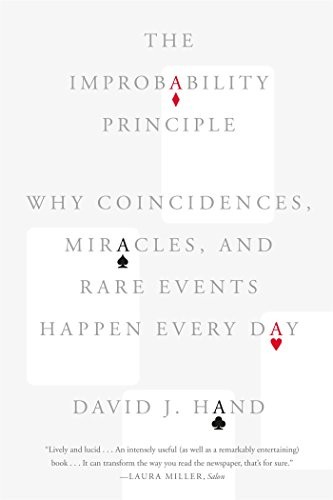 The Improbability PrincipleBook
 Are Algorithms Faking Coincidences? Carl Jung's SynchronicityVideo
 Fluke: The Math and Myth of CoincidenceBook
 Magical thinkingConcept
 The Truth About CoincidencesVideo