Topics › The observer and the observed
Quantum Pings Topics
The observer and the observed
Why a spike is only a number until someone notices it.
This relationship raises essential questions about how meaning emerges from what we perceive.
The Observer and the Observed
The concept of synchronicity often sparks discussions about meaningful coincidences, but what happens when we dive deeper into the roles of the observer and the observed? This relationship raises essential questions about how meaning emerges from what we perceive. When it comes down to it, a spike in data is merely a number until someone interprets it as significant. This essay explores the perspectives of both meaning-seekers and skeptics, grounding the discussion in various sources.
The Nature of Meaning
For meaning-seekers, the act of noticing, interpreting, and giving significance to coincidences plays a crucial role in creating a sense of purpose in life. Charles Richard Walker, in Functional Consciousness, highlights how the Simulation Hypothesis can lead to feelings of nihilism. However, he emphasizes the importance of engaging with reality in a meaningful way. This perspective suggests that individuals can find empowerment in crafting their own interpretations, even in a world that feels increasingly like a simulation (Walker).
From a skeptic's standpoint, the claims about the Simulation Hypothesis lack empirical backing. Critics argue that without hard evidence, the philosophical discussions around it may oversimplify complex ideas. They maintain that meaning cannot be arbitrarily assigned without a foundation.
Synchronicity and Its Interpretations
The collection Synchronicity Through the Eyes of Science, Myth, and the Trickster by Allan Combs and Mark Holland offers a broad look at synchronicity. It examines how different cultures and disciplines approach the idea of coincidences. For meaning-seekers, this diversity in perspectives provides a treasure trove of insights worth exploring. It implies that synchronicity might be a real phenomenon that can be mapped across multiple frameworks.
However, skeptics might argue that the collection's breadth doesn’t equate to empirical support. The variety of interpretations could dilute the effectiveness of any argument. As such, while it offers a range of views, those who prioritize evidence may find themselves unconvinced.
Creativity and Perception
Research also links the perception of meaningful coincidences to creativity. A study published in PLOS ONE in 2024 shows that those who report experiencing more meaningful coincidences also tend to score higher in real-life creativity (PLOS ONE). For meaning-seekers, this connection reinforces the idea that the act of noticing coincidences can enhance creative thought. It implies that being open to these experiences fosters a mindset that values creativity and innovation.
On the other hand, skeptics will caution that correlation does not imply causation. The studies rely on self-reported measures, which can introduce biases. Just because two phenomena occur together doesn’t mean one causes the other. This perspective urges caution before drawing definitive conclusions about the nature of coincidences and creativity.
The Role of Apophenia
The concept of apophenia, the tendency to perceive meaningful patterns in random data, also plays a significant role in this discussion. Research by Alejandro Toledo Martínez indicates that the way we judge coincidences is essential for understanding creativity and apophenia (Toledo Martínez). For meaning-seekers, this opens up avenues for considering how human perception can create connections that enrich our experiences.
Conversely, skeptics may view this tendency as an evolutionary quirk that leads people to see patterns where none exist. This perspective can suggest that the same cognitive processes that allow for creativity also predispose individuals to misinterpret randomness. It raises the question of whether we should celebrate our capacity for meaning-making or approach it with caution.
The Impact of Belief Systems
The belief systems individuals hold can also significantly influence how they perceive meaningful coincidences. A study published in Applied Cognitive Psychology found that paranormal believers are more prone to seeing faces in random patterns than skeptics (Riekki et al.). For those who seek meaning, this finding might affirm that believers genuinely experience more patterns in their lives. It taps into the idea that our beliefs shape our interpretations of reality.
Skeptics, however, could argue that this tendency simply illustrates the mechanisms by which the mind operates. They may claim that seeing patterns in randomness doesn’t provide evidence of a deeper truth; instead, it reflects how our brains are wired to find meaning, whether it’s warranted or not.
Conclusion
The relationship between the observer and the observed is complex and multifaceted. On one hand, meaning-seekers view the act of noticing and interpreting coincidences as a legitimate part of human experience, essential for crafting personal meaning. On the other hand, skeptics urge a more cautious approach, emphasizing the need for empirical evidence and recognizing the cognitive biases that influence how we perceive patterns.
Ultimately, the question of what constitutes meaning in coincidences may never be fully resolved. The perspectives of both camps bring valuable insights into how we navigate our experiences. Whether through creative exploration or critical analysis, the journey into understanding synchronicity and meaningful coincidences is a rich terrain for both the curious and the skeptical.
Sources and further reading
 Functional Consciousness - Pillar 16: Quantum Nihilism and the Simulation MythStudy
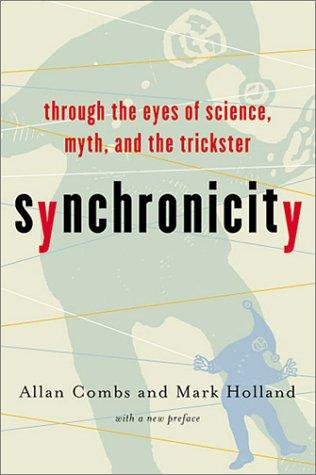 Synchronicity Through the Eyes of Science, Myth, and the TricksterBook
 The Shared Generative Zone Apophenia and creativity split at the judge, not the generator -a dual-process account, measured in language models and framed for humansStudy
 Experiencing more meaningful coincidences is associated with more real-life creativityStudy
 Dean RadinPerson
 The Rupture of Time: Synchronicity and Jung's Critique of Modern Western CultureBook
 Paranormal and religious believers are more prone to illusory face perception than skeptics and non-believersStudy
 Apophenia, theory of mind and schizotypy: Perceiving meaning and intentionality in randomnessStudy