Topics › Why we notice
Quantum Pings Topics
Why we notice
Attention, pattern, and the moments that stand out.
Why We Notice The phenomenon of noticing coincidences and patterns in our lives can be both intriguing and confusing.
The phenomenon of noticing coincidences and patterns in our lives can be both intriguing and confusing. Some people see these moments as significant, while others dismiss them as mere chance. Understanding why we notice certain events over others involves exploring our attention and the roles of pattern recognition in our everyday experiences.
The Nature of Attention
Attention is inherently selective. Our brains filter through vast amounts of information daily, focusing on what we deem important. This filtering process can lead to moments of clarity when we notice patterns or coincidences that resonate with our current thoughts or feelings. For some, these moments feel significant, as if they are pointing to a deeper truth or meaning.
In the context of the Simulation Hypothesis, as discussed in "Functional Consciousness - Pillar 16" by Charles Richard Walker, the critique of nihilism suggests that individuals have the power to create their own meaning in an increasingly simulated world. A meaning-seeker might interpret these coincidences as a way to engage more deeply with reality, finding personal significance in patterns that emerge in their lives (Walker). Conversely, a skeptic could argue that this perspective oversimplifies complex philosophical ideas and lacks empirical support, leaving many unanswered questions about the nature of reality and meaning.
The Role of Apophenia
Apophenia, the tendency to perceive meaningful connections in random data, plays a crucial role in how we notice coincidences. Research by Alejandro Toledo Martínez highlights the importance of distinguishing between idea generation and judgment to understand creativity and apophenia. This implies that our creative processes may be influenced by how we interpret coincidences, leading to an enriched understanding of our experiences.
For someone seeking meaning, this research opens avenues to explore how these moments can catalyze creativity or inspire new ideas. It suggests that our interpretation of connections can shape the ways we express ourselves. However, skeptics may point out that without robust empirical evidence or clear methodologies, the claims regarding the relationship between creativity and apophenia may lack rigor (Martínez).
Noticing Coincidences and Creativity
Interestingly, recent studies published in PLOS ONE indicate a correlation between the frequency of reported meaningful coincidences and real-life creativity. Individuals who notice more coincidences tend to score higher on measures of creativity. This finding has implications for understanding how our openness to experience influences both our perception of coincidences and our creative output (PLOS ONE).
Someone who seeks meaning might feel encouraged by this connection, seeing it as validation that their experiences have a role in shaping their creativity. However, skeptics would argue that correlation does not imply causation. The self-reported nature of both measures raises questions about the accuracy of the findings and whether noticing coincidences actually drives creativity or merely reflects an underlying creative mindset (PLOS ONE).
The Intersection of Meaning and Chance
Exploring the blurry boundaries between meaning and random chance can be both fascinating and frustrating. In "Access or Apophenia," Alejandro Toledo Martínez examines how we interpret events, suggesting that our personal beliefs can significantly influence the significance we assign to coincidences. A meaning-seeker might see this as an affirmation that our experiences are interconnected and can reveal truths about our lives. On the other hand, a skeptic would caution that the lack of empirical evidence leaves these interpretations speculative at best (Martínez).
Similarly, the concept of pareidolia, outlined in "Industrial Pareidolia" by Surjan, highlights our brain's tendency to find patterns in random environments. This phenomenon can amplify our experiences of meaningful coincidences, suggesting that our cognitive biases are at play. While a meaning-seeker might view this as evidence of our innate ability to seek significance, skeptics could argue that pareidolia merely reflects our brain's pattern recognition capabilities without implying any inherent meaning (Surjan).
Frameworks for Understanding Synchronicity
The quest for a more objective understanding of synchronicity is explored in the work of Morgan Wolfgang Lake, who introduces the concept of pragmadromia. This framework emphasizes quantifiable, causally independent events, moving away from purely subjective interpretations of synchronicity. A meaning-seeker could view this as a way to ground their experiences in observable reality. Still, skeptics would warn that even this approach might overlook the complex nuances of human perception (Lake).
Allan Combs and Mark Holland's collection, "Synchronicity Through the Eyes of Science, Myth, and the Trickster," further highlights the multifaceted nature of synchronicity. It surveys the topic across different disciplines, treating it as a phenomenon worth mapping. The breadth of perspectives might appeal to those seeking meaning, offering various lenses through which to view their experiences. However, skeptics may argue that this kaleidoscopic approach lacks a coherent argument or empirical evidence (Combs and Holland).
Conclusion
The reasons we notice certain coincidences and patterns in life reflect a complex interplay of attention, interpretation, and personal beliefs. While meaning-seekers may find significance in these moments, skeptics remind us of the need for empirical evidence and critical thinking. Ultimately, our understanding of these experiences requires a balanced examination of both perspectives, allowing us to appreciate the mystery and intricacies of human perception without jumping to conclusions.
Sources and further reading
 Functional Consciousness - Pillar 16: Quantum Nihilism and the Simulation MythStudy
 The Shared Generative Zone Apophenia and creativity split at the judge, not the generator -a dual-process account, measured in language models and framed for humansStudy
 Thomas CampbellPerson
 Thomas Campbell on The Joe Rogan ExperienceVideo
 My Big TOE: A Trilogy Unifying Philosophy, Physics, and MetaphysicsBook
 Experiencing more meaningful coincidences is associated with more real-life creativityStudy
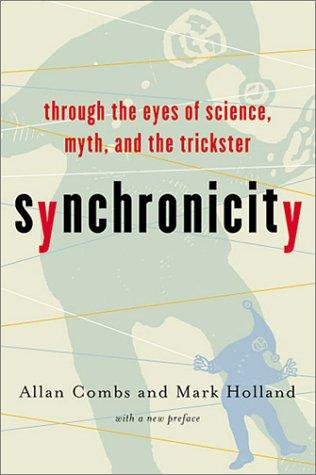 Synchronicity Through the Eyes of Science, Myth, and the TricksterBook
 Industrial PareidoliaStudy