Topics › Confirming what you believe
Quantum Pings Topics
Confirming what you believe

Confirmation bias, the frequency illusion, and how they stack.
Confirming What You Believe The human mind has a curious tendency to find meaning in patterns, even where none exist.
The human mind has a curious tendency to find meaning in patterns, even where none exist. This phenomenon is known as apophenia, a term that refers to the inclination to perceive connections and meaningful relationships in random or meaningless data. While this ability can lead to creative insights and new ideas, it also raises questions about how we affirm our beliefs through confirmation bias and the frequency illusion. Let's explore these concepts, how they interconnect, and what both meaning-seekers and skeptics have to say about them.
Understanding Apophenia
Apophenia is a fundamental part of human cognition. It’s the reason people sometimes see faces in clouds or interpret random events as significant. Research shows that this pattern recognition is not merely a quirk. Instead, it is deeply rooted in our brain's neural mechanisms. For instance, Peter Brugger argues that beliefs in the paranormal, including experiences of synchronicity, originate from brain functions responsible for detecting patterns. This implies that our capacity for seeing meaning is an evolutionary trait that has potential benefits, even if it can lead us astray at times (Brugger).
However, this ability can also be linked to less desirable outcomes, such as the amplification of irrational beliefs. A study by Riekki and colleagues found that people who believe in the paranormal are more likely to see faces in random noise than skeptics are. This finding suggests that believers genuinely perceive more patterns, and it provides direct evidence for the apophenia phenomenon (Riekki et al.). For meaning-seekers, these insights support the idea that their experiences are real and measurable. Skeptics, on the other hand, view this as validation of their argument that such experiences simply reflect a cognitive bias.
Confirmation Bias and the Frequency Illusion
Confirmation bias is another cognitive tendency that plays a significant role in how people interpret experiences. It refers to the propensity to seek out and favor information that confirms existing beliefs while neglecting or dismissing data that contradicts them. This bias can create a feedback loop, reinforcing one's beliefs over time.
The frequency illusion, often described as the "Baader-Meinhof phenomenon," occurs when someone learns about something new and suddenly starts noticing it everywhere. This can amplify confirmation bias, as the mind selectively highlights examples that support the newly formed belief. For instance, if someone becomes interested in a particular philosophy, they may begin to see references to it in various contexts, further validating their interest.
The Interplay of Beliefs and Coincidences
In a world increasingly influenced by technology, the interplay between beliefs and patterns has become even more complex. Valdir Emanoel Colo discusses how ideas can spread rapidly through social media and other digital platforms, likening it to a form of ideological contagion. This rapid dissemination can lead to widespread acceptance of coincidences as significant events. A meaning-seeker might interpret this as evidence of societal synergies, while skeptics may argue that it indicates a lack of critical thinking and discernment (Colo).
This relationship between technology and belief can also be informed by the work of Alejandro Toledo Martínez, who conducted studies on language models. He found that even advanced AI struggles to distinguish between genuine semantic connections and mere coincidences. This raises interesting questions about what it means to interpret content as meaningful. For meaning-seekers, it suggests that human intuition remains uniquely valuable in navigating life's complexities. Skeptics, meanwhile, may interpret this as further evidence that our minds are prone to error and misjudgment when it comes to seeking meaning (Toledo Martínez).
The Psychological Mechanisms at Play
The concept of apophenia is closely linked to psychological traits like schizotypy and theory of mind. Research shows that the cognitive machinery that allows us to understand others' intentions can also lead us to project intention onto randomness. For meaning-seekers, this reveals a sophisticated capacity for meaning detection, while skeptics might argue it aligns with clinical patterns of misinterpretation (Fyfe et al.).
David Marks and Richard Kammann provide a critical perspective on this issue by examining how misattribution plays a role in belief formation. They argue that ordinary experiences and coincidences can be incorrectly attributed to paranormal phenomena due to flawed methods and selective reporting. This illustrates how genuine experiences can still lead people to embrace erroneous conclusions (Marks and Kammann).
Conclusion
The quest for meaning is a deeply human endeavor. Whether through apophenia, confirmation bias, or the frequency illusion, our minds are wired to seek connections that affirm our beliefs. This inclination can lead to creativity and insights, but it also opens the door to misinterpretation and misguided beliefs.
Both meaning-seekers and skeptics offer valuable insights into this complex landscape. Meaning-seekers see a rich tapestry of connections and significance, while skeptics caution against the pitfalls of over-interpretation and cognitive biases. Understanding these dynamics can help us navigate our experiences in a world full of coincidences, encouraging us to question, reflect, and seek clarity without losing sight of the powerful role our minds play in shaping our perceptions.
Sources and further reading
 The Apophenia Gradient Do language models tell genuine semantic connection from coincidence -and does it improve with capability? A signal-detection studyStudy
 Paranormal and religious believers are more prone to illusory face perception than skeptics and non-believersStudy
 The Psychiatric Y2K Bug: Delayed Apophenia and the Epidemic of Ideological Contagion in the Algorithmic EraStudy
 From Haunted Brain to Haunted Science: A Cognitive Neuroscience View of Paranormal and Pseudoscientific ThoughtStudy
 Apophenia, theory of mind and schizotypy: Perceiving meaning and intentionality in randomnessStudy
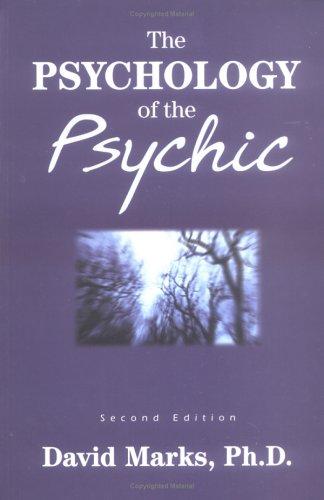 The Psychology of the PsychicBook
 Belief in psychic ability and the misattribution hypothesis: A qualitative reviewStudy
 The Shared Generative Zone Apophenia and creativity split at the judge, not the generator -a dual-process account, measured in language models and framed for humansStudy