Quantum Pings Library
The double-slit experiment
- Type
- Concept
- Publisher
- Physics
- Source
- Wikipedia ↗
- Published
- 1801
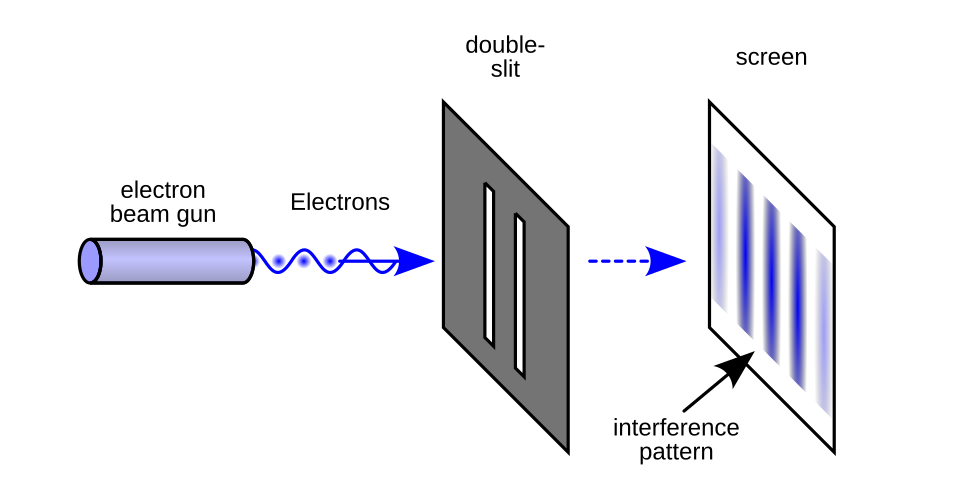
Fire particles one at a time through two slits and they build an interference pattern, as if each one went through both slits at once. Add a detector to see which slit it took, and the interference disappears. The act of looking changes the outcome.
The double-slit experiment began as a demonstration about light and became the central puzzle of quantum mechanics. Send particles through two slits one at a time and they build an interference pattern, as though each particle passed through both slits at once. Put a detector in place to see which slit it took, and the interference pattern disappears.
That single result is the origin of the observer debate. It is why serious physicists have spent a century arguing about what measurement does, and it is the physical basis for this app's claim that observation participates in what becomes actual. The skeptical reading is just as firm: the observer here is a device, not a mind, and the pattern vanishes because the device entangles with the particle, not because anyone was looking. Both readings start from the same experiment and part ways over what "observer" means.
The meaning
This is the experiment that made physicists take the observer seriously. It is the physical basis for the idea, central to this app, that observation is not a passive witness but participates in what becomes actual.
The skeptic
No mainstream physicist reads it as proof that a human mind changes reality. The observer here is a measuring device, and the pattern vanishes because measurement entangles the particle with the device, not because anyone looked.
About the source
First performed with light by Thomas Young around 1801, and the experiment that later became the central puzzle of quantum mechanics.
Key takeaways
- Single particles build an interference pattern as if going through both slits.
- Measuring which slit a particle took destroys the interference.
- The result is the origin of the observer debate in quantum mechanics.