Quantum Pings Library
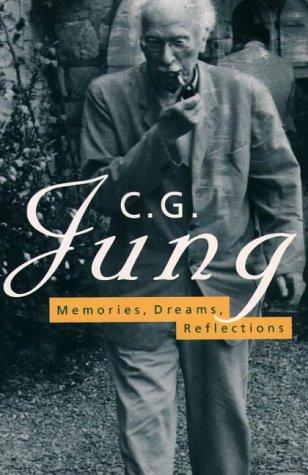
Memories, Dreams, Reflections
- Type
- Book
- By
- C. G. Jung (with Aniela Jaffé)
- Publisher
- Pantheon Books
- Source
- Pantheon Books
- Published
- 1962
Jung's memoir, which contains the golden-scarab story and his account of how the experience of meaningful coincidence entered his thinking.
Jung's memoir, recorded with Aniela Jaffé and published shortly after his death in 1961, is where the abstract concept of synchronicity becomes a lived life. The golden-scarab story appears here in Jung's own telling, along with the many smaller moments that convinced him the psyche and the world are not fully separate.
The memoir is also a cautionary text in a way Jung did not intend. It is memory, and memory is reconstructive — the stories are shaped by the man telling them, decades after the fact, with the confidence of hindsight. That does not make the book less valuable; it makes it the perfect place to see both the power of the experience and the reason the experience alone is not proof.
The meaning
The memoir is where the abstract concept becomes a life: you see Jung meeting his synchronicities as events, not ideas.
The skeptic
A memoir is memory, and memory is reconstructive — the stories are shaped by the man telling them, decades later.
About the author
Jung's autobiographical memoir, recorded and edited with his collaborator Aniela Jaffé.
Key takeaways
- Jung's autobiography, including the scarab anecdote in his own words.
- Shows how synchronicity grew out of lived experience, not just theory.
- Essential context for understanding why the idea mattered so much to him.