Topics › The meaning-seeker and the skeptic
Quantum Pings Topics
The meaning-seeker and the skeptic

The two readers of every coincidence.
The Meaning-Seeker and the Skeptic: Understanding Coincidences When it comes to coincidences, people often have different interpretations.
When it comes to coincidences, people often have different interpretations. Some view them as meaningful signs or messages, while others see them as mere chance. This divide can be framed in two ways: the meaning-seeker's perspective and the skeptic's viewpoint. Each side offers valuable insights, but they also have significant differences in how they understand these experiences.
The Meaning-Seeker's Perspective
Meaning-seekers find significance in coincidences, interpreting them as connections that reveal deeper truths. This viewpoint suggests that we are wired to perceive patterns, and that these patterns can have real meaning. For instance, a study showed that people who believe in the paranormal are more likely to see faces in random noise compared to skeptics. This phenomenon, known as apophenia, highlights how some individuals naturally perceive connections that others might miss (Riekki et al. in Applied Cognitive Psychology).
This inclination to find meaning is further supported by the concept of pareidolia, which involves seeing familiar shapes, like faces, in random textures, such as clouds or toast. Meaning-seekers argue that this tendency indicates a fundamental aspect of human perception, suggesting that our brains are designed to find messages in randomness (Pareidolia). They might argue that it’s not just a cognitive quirk, but rather an essential part of how we connect with the world.
Moreover, meaning-seekers often point to the emotional resonance of uncanny coincidences. When a person experiences a coincidence that seems tailor-made for them, it can feel life-affirming. They might believe that these moments serve as reminders of a larger narrative in their lives. Even skeptics might find themselves momentarily taken aback by such experiences, leading meaning-seekers to argue that the emotional impact is proof of their significance.
The Skeptic's Viewpoint
On the other hand, skeptics maintain that coincidences are simply products of chance, shaped by cognitive biases and the way our brains work. They often invoke apophenia, the tendency to see patterns in random data, as a key explanation for why people perceive connections that do not exist (Apophenia). Skeptics argue that while our brains are extraordinary in their ability to find significance, this ability can lead us astray. They emphasize that most coincidences can be understood as random occurrences.
Skeptics also highlight confirmation bias, the phenomenon where people notice and remember instances that support their beliefs while overlooking those that do not. This means that a single remarkable coincidence can leave a lasting impression, overshadowing countless ordinary moments. While meaning-seekers may celebrate a serendipitous encounter, skeptics see the same experience as a trick of memory and perception (Confirmation Bias).
David Hand’s The Improbability Principle offers a mathematical perspective on coincidences, arguing that improbable events are actually expected when considering the vast number of opportunities in life. This reinforces the skeptic's belief that coincidences don’t need a deeper explanation; they are simply a byproduct of randomness and probability.
Bridging the Divide
While the two perspectives seem at odds, they both acknowledge the complexity of human perception. Meaning-seekers appreciate the brain's ability to detect patterns, while skeptics emphasize that this capability can lead to misinterpretations. For example, research indicates that those with higher levels of schizotypy, traits associated with unusual perceptual experiences, may be more prone to seeing connections in randomness (Fyfe et al. in Cortex). This suggests that the machinery of our brains, which is adept at recognizing intent in social situations, can also project meaning onto random events.
Additionally, Peter Brugger’s work posits that belief in the paranormal, including synchronicity, is grounded in normal brain functions like apophenia and dopamine-driven pattern detection (Brugger in From Haunted Brain to Haunted Science). This suggests that both believers and skeptics are tapping into the same cognitive processes, just interpreting the outcomes differently.
Conclusion
The debate between meaning-seekers and skeptics regarding coincidences reflects a broader conversation about human perception and understanding. Each side offers insights that can enrich our comprehension of these experiences. Meaning-seekers emphasize the significance and emotional weight of coincidences, while skeptics remind us of the cognitive biases that shape our interpretations. Recognizing the strengths and limitations of both perspectives can help us appreciate the complexity of how we experience and understand the world around us.
Sources and further reading
 Paranormal and religious believers are more prone to illusory face perception than skeptics and non-believersStudy
 ApopheniaConcept
 PareidoliaConcept
 Confirmation biasConcept
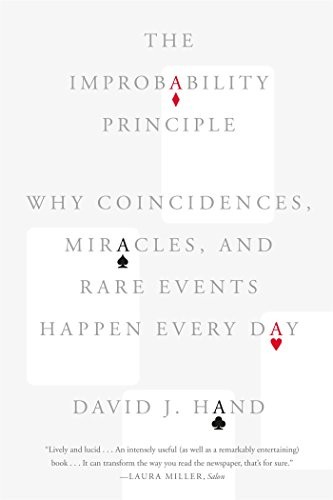 The Improbability PrincipleBook
 From Haunted Brain to Haunted Science: A Cognitive Neuroscience View of Paranormal and Pseudoscientific ThoughtStudy
 Apophenia, theory of mind and schizotypy: Perceiving meaning and intentionality in randomnessStudy
 Belief in psychic ability and the misattribution hypothesis: A qualitative reviewStudy