Topics › Luck and the illusion of control
Quantum Pings Topics
Luck and the illusion of control

Where luck ends and the story we tell about it begins.
It's often seen as something random, an unpredictable force that influences outcomes in our lives.
Luck and the Illusion of Control
Luck is a curious concept that can evoke a range of emotions, from excitement to frustration. It's often seen as something random, an unpredictable force that influences outcomes in our lives. But when we dig a little deeper, we find that our perception of luck might be more complex. The difference between pure chance and the stories we tell about our luck can shape our understanding of control in our lives, often leading to a fascinating interplay between belief and skepticism.
The Nature of Coincidence
Coincidences are often viewed as lucky events, but there's a more intricate process behind how we perceive these occurrences. Many of us have experienced moments that feel uncanny or significant, where two unrelated events seem to converge in meaningful ways. This feeling can arise from something known as confirmation bias. Our brains are wired to notice events that support our beliefs while ignoring those that don't. This selective perception can lead us to see connections that might not really be there (Confirmation Bias). A single remarkable coincidence can overshadow countless mundane moments, reinforcing the idea that luck is at play.
When we encounter a coincidence, it can feel like proof of a deeper connection. Some people may interpret these events as signs or messages from a greater force, a perspective shaped by our personality and experiences. Research indicates that certain personality traits, like neuroticism, can influence how we perceive death and coincidence, and that those in fields like medicine may hold stronger paranormal beliefs than those in theology (The Relationship Between Paranormal Beliefs, Personality, Creativity, and Death Anxiety by Özlem Olguner Eker et al.). This suggests that education and personal characteristics can shape our openness to interpreting coincidences as meaningful.
The Mathematical Perspective
From a mathematical standpoint, coincidences can be explained through principles of probability. In "The Improbability Principle," David J. Hand argues that highly improbable events are far more common than we might think. He points out that when we have a large enough sample of events, what seems unlikely can actually be expected (The Improbability Principle by David J. Hand). This perspective challenges the notion that coincidences carry special significance. Instead, it emphasizes how statistical laws, like the law of truly large numbers, govern the nature of these occurrences.
Similarly, Joseph Mazur's "Fluke" delves into the math behind coincidences, illustrating how our intuitions about probability are often incorrect. Many coincidences are much more likely than we feel, and our miscalculations can lead us to believe that luck is involved (Fluke: The Math and Myth of Coincidence by Joseph Mazur). While some may find the mathematical explanations cold or dismissive of their experiences, they provide a rational framework that counters the emotional allure of attributing events to luck.
The Role of Magical Thinking
Magical thinking also plays a significant role in how we interpret luck. This psychological concept refers to the belief that our thoughts or feelings can influence external events. It's a common trait found across cultures, suggesting that we're all wired to seek connections that may not actually exist (Magical Thinking). For those who embrace this perspective, luck feels like a part of a larger narrative, where our internal states can manifest in the external world.
However, skeptics argue that the universality of magical thinking reflects a fundamental aspect of human cognition, rather than evidence of actual connections. The same cognitive shortcuts that lead us to see patterns and meaning can result in misguided beliefs about luck and fate. They contend that these tendencies are merely byproducts of how our brains operate, not indicators of some cosmic connection.
The Digital Age and Ideological Spread
In today’s digital age, the way we perceive luck and coincidence is also shaped by the rapid spread of ideas across platforms. The concept of "delayed apophenia" suggests that our beliefs can spread like a virus in a world dominated by algorithms and technology (The Psychiatric Y2K Bug by Valdir Emanoel Colo). This phenomenon can amplify our interpretations of coincidences, making it easier for us to find patterns that align with our beliefs. A meaning-seeker might see this as a validation of their experiences, while skeptics may criticize the lack of empirical evidence in discussions about ideological contagion.
Moreover, recent studies on the capabilities of language models reveal that even advanced AI struggles to differentiate true connections from mere coincidences. These findings illustrate that interpreting meaning is inherently complex, and while machines can process data, the unique human ability to seek significance may remain unmatched (The Apophenia Gradient by Alejandro Toledo Martínez).
Conclusion
Luck, coincidences, and the stories we tell ourselves about them are deeply intertwined. While meaning-seekers may find validation in their experiences, skeptics urge us to look at the data and cognitive biases that shape our perceptions. The exploration of these themes invites us to reflect on the nature of control in our lives and how our beliefs can both inspire and deceive. Ultimately, the interplay between chance and narrative illustrates not just how we interpret the world around us, but also how we navigate our understanding of ourselves in an unpredictable universe.
Sources and further reading
 The Relationship Between Paranormal Beliefs, Personality, Creativity, and Death Anxiety: An Interfaculty ComparisonStudy
 Confirmation biasConcept
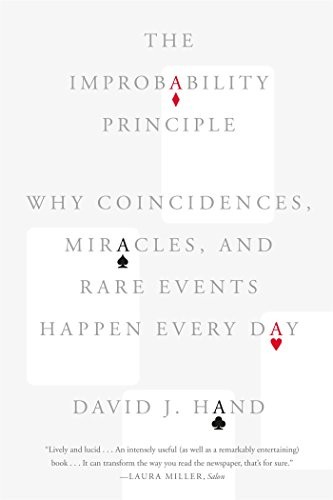 The Improbability PrincipleBook
 Fluke: The Math and Myth of CoincidenceBook
 Magical thinkingConcept
 The Truth About CoincidencesVideo
 The Psychiatric Y2K Bug: Delayed Apophenia and the Epidemic of Ideological Contagion in the Algorithmic EraStudy
 The Apophenia Gradient Do language models tell genuine semantic connection from coincidence -and does it improve with capability? A signal-detection studyStudy