Topics › The uncanny
Quantum Pings Topics
The uncanny
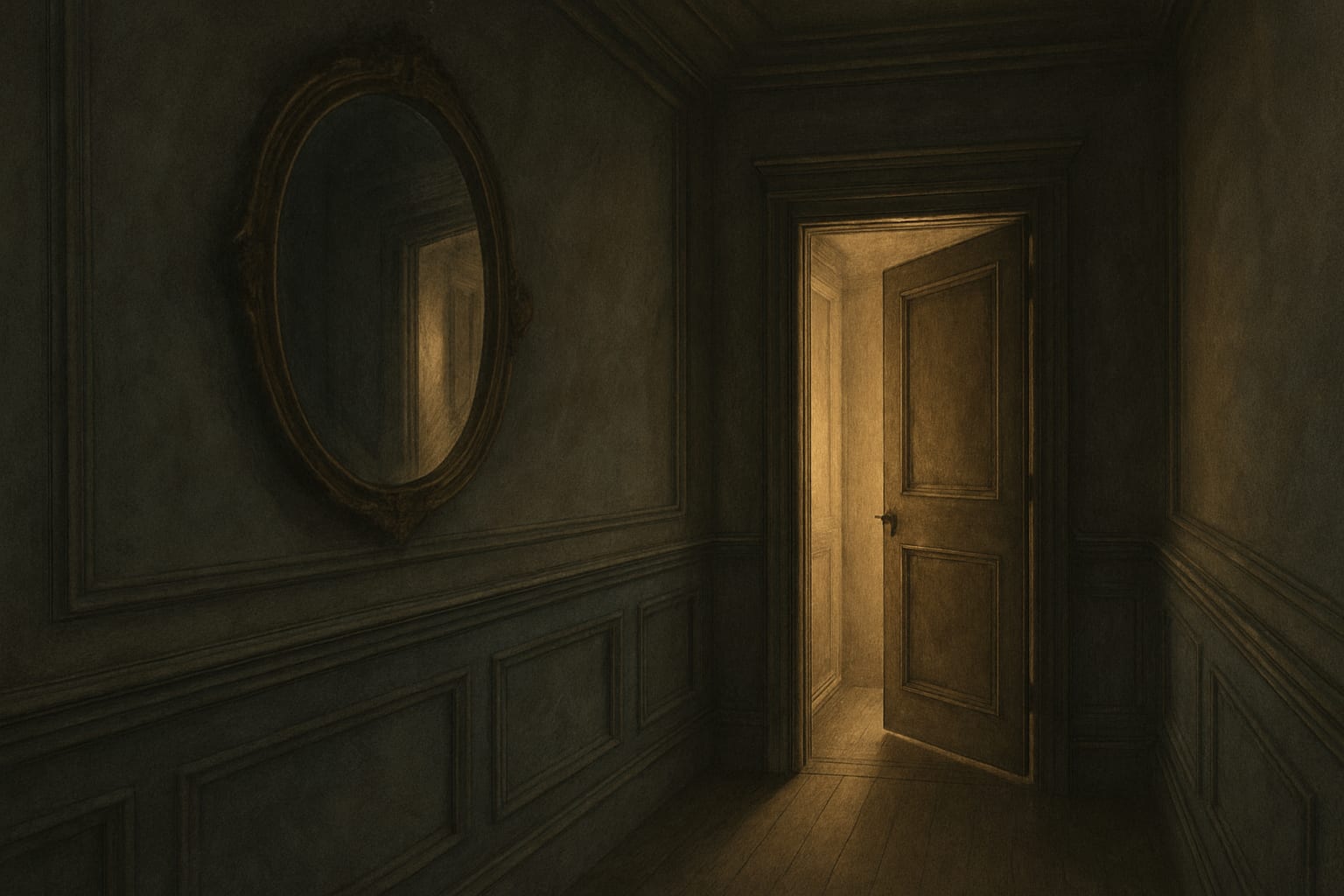
Why familiar things can suddenly feel strange, meaningful, and alive.
This often occurs when we encounter coincidences that seem to hold deeper meanings.
The Uncanny: When Familiarity Turns Strange
The uncanny is a complex experience where familiar things suddenly feel strange and alive. This often occurs when we encounter coincidences that seem to hold deeper meanings. Some people see these moments as signs or messages, while skeptics argue they are merely the product of our brains interpreting random events. Understanding the uncanny involves exploring both perspectives.
The Pauli Effect: A Folk Legend
One intriguing example comes from the physics community, known as the "Pauli Effect." This term refers to the lighthearted belief that laboratory equipment would inexplicably fail in the presence of physicist Wolfgang Pauli. The stories about this effect circulate among scientists, turning it into a sort of in-joke. Some physicists even half-believed in it, pointing to the consistent and long-standing nature of these anecdotes as evidence of something unusual at play (Anecdote).
However, skeptics argue that these tales are merely folklore. Pauli was an intense and memorable figure, and equipment failures are a common occurrence in any lab. They suggest that confirmation bias leads people to remember only the failures that happened around Pauli, creating a legend out of coincidence. While the Pauli Effect is fascinating, it serves as a prime case study in how selective memory contributes to our understanding of synchronicity.
Jung's Meaningful Coincidences
Carl Jung, the Swiss psychiatrist, contributed significantly to our understanding of meaningful coincidences through personal experiences he documented in "Memories, Dreams, Reflections." One of his most famous stories involves a patient who described a dream about a golden scarab. At that moment, a real beetle, resembling a scarab, tapped at the window. This encounter helped break the patient's resistance, and Jung interpreted it as a powerful example of synchronicity (Memories, Dreams, Reflections by C. G. Jung).
From the perspective of meaning-seekers, such experiences highlight the connection between inner thoughts and outer reality. They might argue that these coincidences are moments where the universe aligns with our subconscious needs. Yet, skeptics offer a different take. They point out that beetles are common, particularly in summer, and Jung's own predisposition to notice such events may have influenced his interpretation. This anecdote, while compelling, is just one story and doesn't provide concrete evidence for any broader theory.
Recognizing Patterns: Pareidolia
The phenomenon of pareidolia further illustrates how our minds search for meaning. In industrial settings, people often perceive patterns or familiar shapes in random stimuli. Some see this as evidence of our brains being wired to find significance, suggesting that coincidences in these contexts might carry deeper meanings (Industrial Pareidolia by Surjan).
On the other hand, skeptics argue that pareidolia is simply a cognitive bias. They maintain that recognizing patterns in randomness does not necessarily imply any meaningful connection. Just because we can see a face in a cloud doesn’t mean there’s a purpose behind it. This debate reveals how our understanding of the uncanny is shaped by both our psychological makeup and the limitations of our perception.
Ideas in the Digital Age
The intersection of technology and psychology becomes even more relevant in our modern world. In "The Psychiatric Y2K Bug," Valdir Emanoel Colo discusses how beliefs can spread like a virus online. This idea of "delayed apophenia" suggests that patterns in thought can shape societal beliefs, especially as people become more connected through technology (The Psychiatric Y2K Bug).
While meaning-seekers may see this as a validation of how coincidences can influence collective thought, skeptics point out that the paper lacks empirical evidence. They emphasize that correlation does not imply causation and question the validity of the claims made. This ongoing discussion highlights how our understanding of coincidence and meaning is continually evolving, particularly as we navigate an increasingly algorithm-driven world.
Exploring Paranormal Beliefs
Another intriguing angle is the study of paranormal beliefs and their connection to personality traits. Research shows that certain personality types, such as those with higher levels of neuroticism, might be more inclined to perceive coincidences as meaningful (The Relationship Between Paranormal Beliefs, Personality, Creativity, and Death Anxiety). Meaning-seekers might interpret this as evidence that individual differences influence our openness to the uncanny.
However, skeptics would note the study's limited sample size and the complexities involved in establishing causation. This suggests that while some people may interpret experiences as meaningful, others may not, and the reasons behind these differing perceptions remain to be fully understood.
The Nature of Reality
The discussion extends into philosophical realms, as seen in "Functional Consciousness." Here, the author critiques the Simulation Hypothesis, arguing that it promotes a nihilistic view of existence. This perspective could be seen as empowering for meaning-seekers, who are encouraged to create their own meanings in a seemingly chaotic world (Functional Consciousness).
Skeptics, however, might argue that such claims lack empirical support and oversimplify complex ideas about reality. This illustrates the ongoing tension between seeking meaning and questioning the nature of our experiences.
Conclusion
The uncanny experience of familiar things feeling strange and alive is a rich subject that elicits varied interpretations. While many find meaning in coincidences and synchronicities, others argue these are just products of our minds looking for patterns. Whether these moments signify deeper truths or are merely illusions shaped by cognitive biases, the exploration of the uncanny remains a fascinating intersection of psychology, folklore, and personal experience. As we navigate our understanding, it becomes clear that meaning and coincidence will continue to inspire both wonder and skepticism.
Sources and further reading
 The Pauli EffectConcept
 Memories, Dreams, ReflectionsBook
 Industrial PareidoliaStudy
 The golden scarab at the windowStory
 The Psychiatric Y2K Bug: Delayed Apophenia and the Epidemic of Ideological Contagion in the Algorithmic EraStudy
 The Relationship Between Paranormal Beliefs, Personality, Creativity, and Death Anxiety: An Interfaculty ComparisonStudy
 Functional Consciousness - Pillar 16: Quantum Nihilism and the Simulation MythStudy
 MIX-46: Ultra‑High‑Rigor Protocol for Orb PhotographyStudy