Topics › Time and timing
Quantum Pings Topics
Time and timing

Why the moment something happens can feel like it carries a message.
The Role of Time and Timing in Meaningful Coincidence Timing can be a curious thing.
The Role of Time and Timing in Meaningful Coincidence
Timing can be a curious thing. You might experience moments when an event feels particularly significant, as if it carries a deeper message. These instances often lead people to reflect on the connections in their lives. While some view these meaningful coincidences as signs or messages from a greater force, others approach them with skepticism, attributing them to chance or human cognition's quirks. Understanding the perspectives around time and timing can help illuminate why certain moments resonate so strongly.
The Meaning-Seeker's View
For those who seek meaning in their experiences, timing often feels intentional. This perspective suggests that certain coincidences happen at specific moments for a reason. Researchers like Bernard Beitman have explored this idea in depth, arguing that coincidences are not just random occurrences. In "Meaningful Coincidences: How and Why Synchronicity and Serendipity Happen," Beitman makes the case that these experiences are common, describable, and worthy of study. He believes that by cataloging different types of coincidences, we can better understand how they intersect with our lives and the messages they may convey (Meaningful Coincidences by Beitman).
Moreover, concepts like apophenia, the tendency to perceive meaningful patterns in random data, play a significant role in this view. Alejandro Toledo Martínez's work suggests that creativity and the judgment we place on coincidences can shape how we interpret them (The Shared Generative Zone by Martínez). If we judge a coincidence to be meaningful, it can enhance our creativity and lead us to feel more connected to our experiences.
Timing can also trigger emotional responses that reinforce the feeling of significance. For instance, encountering a long-lost friend on the very day you were feeling nostalgic can evoke a sense of serendipity. This reinforces the notion that timing is not just about when events happen but how they align with our emotional states.
The Skeptic's Perspective
On the other side of the coin, skeptics question the validity of attributing deeper meaning to these experiences. They argue that while coincidences can feel meaningful, they often arise from statistical principles rather than mystical forces. David J. Hand's "The Improbability Principle" provides a thorough examination of why improbable events occur frequently. He outlines that, given enough opportunities, what seems extraordinary is often just a product of chance (The Improbability Principle by Hand).
Skeptics often point out that human cognition is wired to find patterns, even where none exist. The concept of pareidolia, which refers to seeing recognizable patterns in random data, serves as an example of this tendency. Surjan's work on industrial pareidolia illustrates how our brains can perceive significance in chaos, but it does not imply that these perceived meanings carry any inherent value (Industrial Pareidolia by Surjan).
The Role of Objective Analysis
While the meaning-seeker's view emphasizes subjective experience, there are frameworks that attempt to approach synchronicity and coincidence from a more objective angle. Morgan Wolfgang Lake's work on pragmadromia proposes a method for understanding synchronicity based on observable, quantifiable events, rather than purely personal interpretations (Pragmadromia by Lake). This approach offers a different lens through which to view coincidences, suggesting that even if they feel significant, they can be analyzed through data and causation.
However, even this objective framework has its limitations. Critics argue it might overlook the complexities of human perception, which often colors our interpretations of events. Even when we try to quantify coincidences, the subjective experience of timing and emotional context can influence our understanding of those events.
The Complexity of Intuition
Backtracking to the meaning-seeker's perspective, some researchers argue that our intuition can lead us to insights that feel like meaningful coincidences. Aziel Eliab's concept of backward cognition suggests that our brains may recognize outcomes before retracing the steps that got us there (Backward Cognition by Eliab). This can create a sense of connection between seemingly unrelated events, enhancing the feeling that timing plays a significant role in our experiences.
Yet skeptics raise valid concerns about this notion. Without empirical support or established diagnostic criteria, backward cognition remains a speculative idea. The challenge lies in balancing these intuitive insights with scientific scrutiny.
Conclusion
The relationship between time, timing, and meaningful coincidences is complex. For those who seek deeper meanings, coincidences can feel like messages or signs, shaped by emotional context and personal judgment. On the other hand, skeptics emphasize the role of chance, statistical principles, and cognitive biases, suggesting that what we perceive as meaningful may just be a product of our brains looking for patterns.
Research continues to explore these territories, offering new insights into how we understand our experiences. Whether one leans toward a meaning-seeker's perspective or a skeptic's viewpoint, the interplay of time and timing remains a fascinating subject of inquiry. Understanding it may help us navigate the coincidences we encounter in life, whether we see them as mere chance or as invitations to reflect on our journey.
Sources and further reading
 The Shared Generative Zone Apophenia and creativity split at the judge, not the generator -a dual-process account, measured in language models and framed for humansStudy
 Pragmadromia: Objective SynchronicityStudy
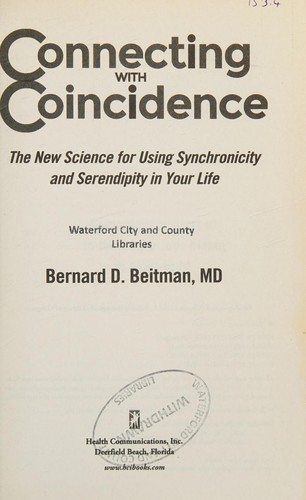 Connecting with CoincidenceBook
 The Improbability PrincipleBook
- Meaningful Coincidences: How and Why Synchronicity and Serendipity HappenBook
 Industrial PareidoliaStudy
 Backward Cognition: A Working Synthesis of Reverse-Pattern Intuition and Interlocking Constructs in Cognitive ScienceStudy
 The Apophenia Gradient Do language models tell genuine semantic connection from coincidence -and does it improve with capability? A signal-detection studyStudy